Search Through Number Archives for 3341428823, 3405124651, 3331187516, 3937911490, 3403814962, 3713582947, 3349902447, 3288821735, 3201815383, 3888797585

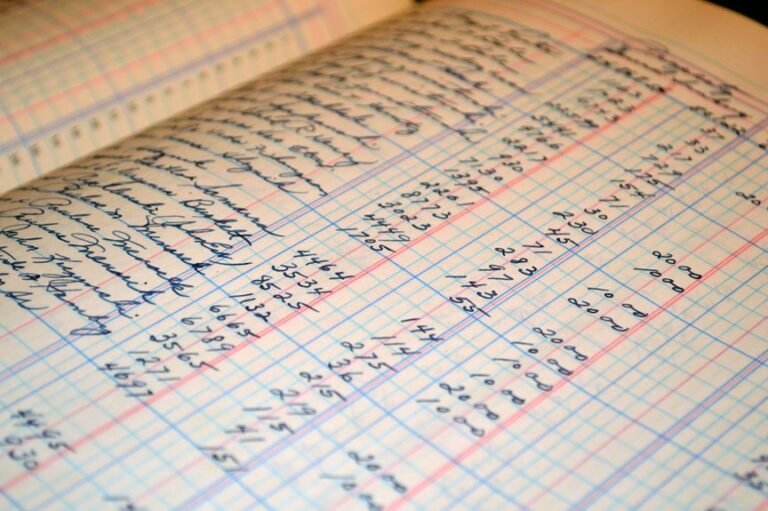
The discussion begins with a careful framing of ten numeric sequences as archival artifacts. Each code is treated as a potential pointer to provenance, access terms, and relational networks within a larger system. The approach is methodical: catalog, cross-reference, and test assumptions across archives. Stakes are clarity and traceability. The question remains: what patterns emerge when these digits are mapped to context, and what narrative consequences follow from such mappings? The path invites further, disciplined exploration.
What These Numbers Can Tell Us About Archives
These numbers function as entry points into archival patterns, revealing how records are organized, assigned, and circulated within a collection. The framework supports decoding patterns and archival storytelling by mapping digits to context, functions, and provenance. This systematic lens furnishes historical context, enabling freedom-aware readers to interpret organization, relationships, and access pathways without presupposed conclusions or obscurity.
Decoding Each Sequence: Clues, Codes, and Context
Decoding each sequence reveals a structured logic behind archival identifiers, where numeric strings function as compact records of provenance, function, and access pathways.
The analysis isolates decoding clues within archival codes, clarifying how each digit maps to context, lineage, and permissions.
Historical codes emerge as metadata scaffolds, guiding interpretation, while narrative context interweaves with indexing rules, ensuring transparent, systematic access for researchers seeking purposeful freedom.
Methods for Mapping Digits to Historical Narratives
A systematic framework guides the mapping of digits to historical narratives, treating each numeral as a discrete unit that encodes provenance, access permissions, and contextual relationships. Narrative mapping emerges through structured taxonomies, cross-referencing archives, and transparent provenance logs. Archival interpretation aligns methodological rigor with interpretive openness, enabling disciplined inquiry while fostering freedom in recognizing multiple valid narrative trajectories.
From Data to Story: Crafting a Cohesive Archive Journey
From the framework established in the prior subtopic, the process of turning data into narrative unfolds through disciplined sequencing, traceable provenance, and structured storytelling logic. This phase emphasizes insight pairing and narrative mapping to align facts with meaning, enabling a cohesive archive journey. The approach remains systematic, meticulous, and organized, balancing freedom of interpretation with rigorous documentation and transparent, verifiable connections.
Frequently Asked Questions
Do These Numbers Correspond to Specific Archival Collections or Items?
The numbers do not reveal direct archival collections without access; they might be identifiers. Systematically, they suggest numeric mappings within digit archives, but further context is required, as such mappings do not guarantee item correspondence for full clarity.
Are There Privacy Concerns in Linking Digits to Individuals or Events?
“Forewarned is forearmed.” Privacy concerns arise when linking digits to individuals; identity mapping risks exposure. Archival connections require careful data visualization, transparent policies, and consent to balance freedom with responsible handling of sensitive information. Systematic, meticulous, organized.
Can Digit Sequences Imply Dates or Geographical Origins?
Digit sequences can suggest patterns but do not reliably encode dates or geographic origin; cautious interpretation is essential. The analysis emphasizes date mapping and geographic origin as possible inferences, yet requires corroborating evidence and transparency.
How Reliable Are Mappings Between Digits and Historical Narratives?
The reliability is modest: Theory Framing clarifies assumptions, while Data Variability reveals limits; mappings are provisional, anchored by context and evidence, not absolutes. Systematic evaluation shows patterns emerge yet are open to reinterpretation and revision.
What Tools Best Visualize These Numeric Archive Connections?
Diagram mapping and timeline visualization are best tools for visualizing numeric archive connections; they enable systematic, meticulous organization while preserving an air of freedom, allowing viewers to explore relationships with clarity and purposeful, independent interpretation.
Conclusion
In the archive’s quiet, each digit lays a path like pebbles on a careful trail. The sequences bloom into mapped provenance, permissions, and kinships, each relation a thread through time’s loom. Light threads through cross-referenced indexes, revealing patterns as orderly as a well-kept ledger. Narrative becomes architecture: transparent, repeatable, and open to scrutiny. The journey, exact and pared down, invites readers to follow the sequence, see the care, and trust the stories the digits quietly enact.