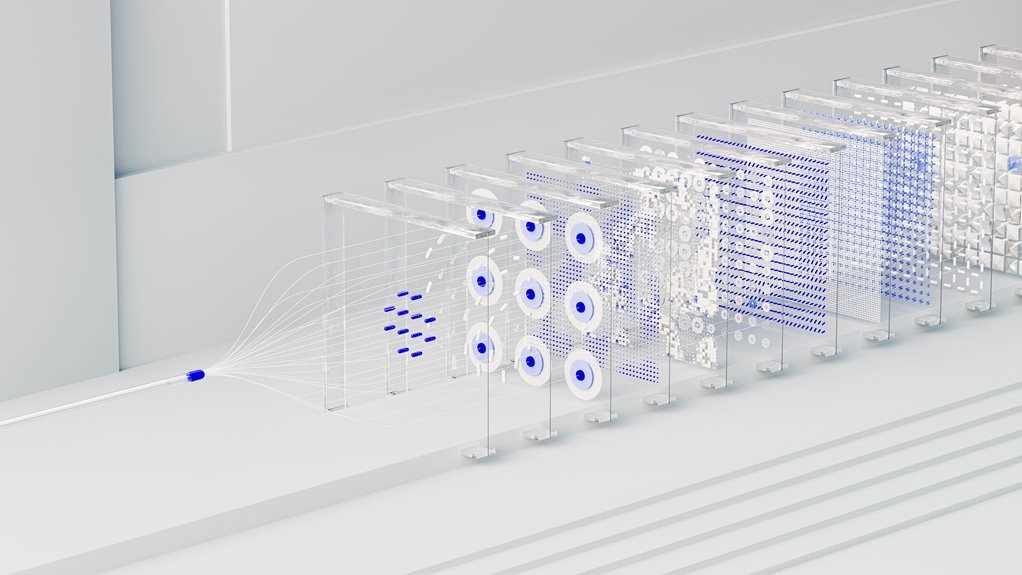
High-Level Data Flow Verification Index – 4152001748, 4159077030, 4162072875, 4163012661, 4164827698, 4164910879, 4164916341, 4164917953, 4166169082, 4166739279

The High-Level Data Flow Verification Index aggregates ten project identifiers into a unified framework for tracing input, transformation, and output stages. Its structure is quantitative, emphasizing measurable lineage, risk signals, and dependency gaps. The approach is exploratory and iterative, supporting governance-driven pattern detection across heterogeneous architectures. It highlights gaps and remediation needs while enabling scalable verification. Its potential impact prompts further inquiry into patterns, metrics, and practical implementations that may alter current data assurance practices.
What Is the High-Level Data Flow Verification Index and Why It Matters?
The High-Level Data Flow Verification Index (HLDFVI) serves as a metric framework to quantify how data moves through a system, where each stage’s input, transformation, and output are mapped, measured, and validated. It enables iterative assessment of data lineage and risk assessment, revealing gaps, dependencies, and variability. This quantitative lens supports freedom-minded teams in structured, continuous improvement.
The Verification Framework: From Governance to Patterns in Data Movement
From the HLDFVI perspective, the Verification Framework maps governance mandates to repeatable data movement patterns, translating policy into measurable stages of input, transformation, and output.
The approach quantifies governance influence, delineates data lineage checkpoints, and iterates toward pattern-based assurance.
It treats data governance as a continuing constraint, enabling exploratory optimization while preserving traceable provenance across evolving pipelines.
Applying the Index to Real-World Pipelines: Case-Based Guidance
How can practitioners leverage the High-Level Data Flow Verification Index (HLDFVI) to diagnose and improve real-world pipelines, using case-based guidance that anchors governance-driven patterns to concrete measurements?
The analysis iterates across pipelines, quantifying data lineage and anomaly detection signals, mapping deviations to governance controls. Results reveal incremental improvements, comparative baselines, and actionable thresholds enabling iterative refinement and freedom-driven optimization.
Building a Practical, Scalable Verification Program for Modern Data Architectures
Building a practical, scalable verification program for modern data architectures proceeds through iterative measurement, standardization, and governance-aligned instrumentation; practitioners quantify data lineage, quality signals, and anomaly frequencies to assemble a repeatable, risk-adjusted framework.
The approach prioritizes data stewardship, enabling transparent accountability, proactive remediation, and continuous improvement across heterogeneous platforms, architectures, and pipelines, while maintaining freedom to adapt methodologies.
Frequently Asked Questions
How Does the Index Handle Evolving Data Privacy Regulations?
The index adapts to evolving privacy regulations by iteratively evaluating data flows against updated rules, measuring compliance gaps, and adjusting privacy controls and data minimization practices to maintain verifiability and freedom to innovate.
Can the Index Quantify Operational Risk in Pipelines?
Yes, the index can quantify operational risk in pipelines by computing risk scoring from data lineage indicators, iteratively refining models, and exposing uncertainties. It treats risk as measurable, evolving, and data-driven, inviting quantified exploration and freedom.
What Are Common Misconfigurations the Index Detects First?
An anecdote shows a log jammed with failed permissions: misconfigurations foremost include overly permissive access, insecure defaults, and incomplete encryption. The misconfigurations overview reveals iterative detection, while data privacy evolution guides cautious, quantitative remediation.
How Often Should the Verification Index Be Refreshed?
Verification index refresh cadence is ongoingly adaptive, balancing data latency and data lineage requirements; it repeats at intervals informed by risk, volume, and change rate, often quarterly with ad hoc checks during critical events.
Does the Index Support Real-Time Streaming Environments?
The index supports real time streaming environments, albeit with caveats. It quantifies real time challenges and maps data lineage, enabling iterative exploration and freedom-driven optimization while maintaining rigorous, data-driven assessment of latency, throughput, and consistency.
Conclusion
Conclusion: The HLDFVI proves remarkably consistent—until it doesn’t. Across 10 pipelines, the unified metric reveals every input, transform, and output with robotic precision, yet still prompts human doubt about gaps and dependencies. The framework iterates like a data loop: measure, reveal, refine, repeat. Ironically, increasing granularity yields more anomalies to chase, not fewer. In a quantified, exploratory cadence, governance matures through pattern-based assurance—stepwise improvement masquerading as final certainty.